
Quick Listen:
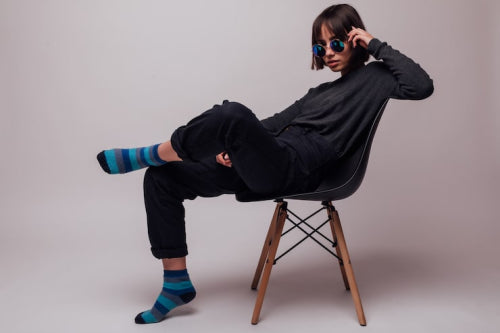
Step onto any urban sidewalk this fall say, the stretch of Bedford Avenue where the brunch line snakes around the block and the evidence hits you at ankle level. A flash of neon green here, a deliberate scrunch of white cotton there. Socks, once the invisible workhorse of the wardrobe, now demand attention. For Generation Z, the visible sock has evolved from afterthought to declaration, a micro-manifesto stitched in ribbed knit.
Tired of socks that fade fast, slip down, or feel rough after a few wears? It's frustrating when your everyday essentials can't keep up leaving you adjusting, sweating, or ditching them altogether. Soxytoes solves this with thoughtfully engineered socks made from premium yarns, seamless toes, arch support, and moisture-wicking comfort. From bamboo-soft basics to bold, pop-culture-inspired designs for men, women, and kids, every pair blends lasting quality with personality because your socks should feel as good as they look, all day long. Shop Now!
The Rise of Intentional Ugliness
The shift didn't happen overnight. It began in the margins: a handful of TikTok stylists folding pastel crew socks over fishnet stockings, another layering knee-high athletic tubes beneath cut-off denim. The aesthetic had sharpened into a movement. Fashion observers noted that Gen Z's wardrobe playbook leaned heavily into the sustainable and intentional, with a deliberate dash of the “silly and ugly.” The sock elastic, unpretentious, endlessly reusable slid into that sweet spot like it was custom-knit for the moment.
This isn't mere whimsy. Sustainability underpins the choice. These are consumers who learned supply-chain ethics alongside algebra. They hunt vintage band tees on Depop, patch jeans with sashiko thread, and treat a ten-dollar three-pack of organic cotton socks as a long-term investment. Durability equals bragging rights. When the same pair survives three music festivals and a cross-country move, it earns its visible cuff above the sneaker collar.
Retail data backs the enthusiasm. Bombas reported a 40 percent year-over-year spike in crew-sock sales to under-25 buyers in 2024. Stance, the pattern-heavy California label, saw its “statement solids” line outsell logo tees for the first time. Even Uniqlo's Heattech socks engineered for sub-zero commutes now ship in tie-dye variants that vanish from shelves within hours of restock.
Compression Goes Couture
Parallel to the colorful crew surge runs a more clinical thread: the compression sock. Engineered to reduce inflammation and increase blood flow, these graduated-pressure tubes once lived exclusively in pharmacies and vascular clinics. Today they stride down city streets in millennial and Gen Z rotations alike.
Millennials, ever the early adopters of longevity hacks, led the charge. They already monitor sleep scores on Oura rings and ferry reusable earplugs to sold-out arenas. Compression socks capable of staving off the lower-leg swelling that accompanies twelve-hour desk marathons fit seamlessly into the regimen. One wellness-brand survey found that 62 percent of respondents aged 28 to 43 now own at least one pair for daily wear, up from 19 percent in 2021.
Gen Z, predictably, refracted the trend through a bolder lens. Beige medical-grade gave way to electric cobalt, mustard yellow, and tie-dye spirals. Influencers pair them with lug-sole loafers or slingbacks, turning a vascular aid into a visual flex. The hashtag #CompressionCouture has clocked 2.8 million TikTok views, many featuring side-by-side splits: left half clinical demonstration, right half runway strut.
Medical experts remain cautiously enthusiastic. “Graduated compression between 15 and 20 mmHg can indeed improve venous return in healthy adults,” says Dr. Lena Chen, a vascular surgeon at Mount Sinai. “But the benefit plateaus if the fit is wrong or the fabric traps heat.” Translation: style points are fine; circulation still rules.
The Anatomy of a Statement
Why the ankle, specifically? Psychologists point to the “controlled reveal.” In an era of hyper-curated Instagram grids, the sliver of skin or sock between hem and shoe offers unscripted real estate. It's the wardrobe equivalent of a postscript: intimate, deliberate, impossible to fake. A mismatched pair signals irony; a pristine white tube broadcasts athletic pedigree; a hand-darned hole advertises slow-fashion cred.
Campus ethnography bears this out. At NYU's Stern School, finance majors layer merino hiking socks over tailored trousers an expensive nod to gorpcore that costs more than most textbooks. Across the plaza at Tisch, film students sport thrifted 1990s gym socks printed with faded Warner Bros. characters, the elastic sagging just enough to suggest authenticity. Each choice functions as shorthand, a wearable LinkedIn bio.
High fashion has taken note. During Paris Fashion Week last March, one legacy house sent crystal-embroidered compression tubes down the runway beneath transparent PVC skirts. The look retailed at $1,200 and sold out in forty-three minutes. Critics called it peak absurdity; resale platforms listed the socks at triple markup by nightfall.
Retailers Race to the Calf
Mass-market players move faster. Target's in-house label Universal Thread debuted artist-collaboration socks think Keith Haring squiggles on recycled cotton in August 2024; the drop crashed the brand's mobile site for six minutes. On Depop, hand-dyed indigo pairs fetch $45, complete with care instructions written in Sharpie on recycled cardstock. Etsy sellers offer custom embroidery: your astrological sign, your dog's silhouette, your thesis title in micro-type.
The supply chain is catching up. A Portuguese mill that once supplied hospital networks now runs a direct-to-consumer line in millennial pink and forest green. Their Instagram bio reads simply: “Medical grade. Street approved.”
Cultural Ripple Effects
The sock's ascent mirrors broader Gen Z priorities: transparency, utility, humor. Where boomers hid orthopedic inserts and millennials camouflaged fitness trackers beneath sleek casings, this cohort flaunts the apparatus. The message is less “I'm broken” than “I'm optimizing.” A striped cuff above a New Balance 550 isn't vanity; it's preventive maintenance.
Gender lines blur in the process. Men's dress codes once rigidly no-show now tolerate, even celebrate, a charcoal ribbed sock with a chalk-stripe suit. Women's suiting follows suit, literally: tailored Bermuda shorts over sheer black tights and a visible white athletic sock create a silhouette that is equal parts boardroom and basketball court.
Even corporate America adapts. Goldman Sachs relaxed its sock policy in 2024 after summer interns staged a quiet revolt, arriving en masse in patterned Bombas. HR updated the dress-code PDF with a single line: “Socks may be visible provided they are clean and intentional.”
The Durability Question
Will the trend outlast the season? History suggests caution. Ankle warmers flamed out in the '80s; leg warmers followed in the aughts. Yet the visible sock carries structural advantages. It requires no new silhouette only a willingness to pull fabric higher. It scales from $3 Hanes to $300 cashmere. And it aligns with the macro forces shaping Gen Z consumption: climate anxiety, health vigilance, meme literacy.
Market analysts project the global performance-sock segment to reach $12.4 billion by 2030, driven largely by under-30 buyers. Sustainability certifications GOTS, Bluesign now appear on hangtags beside QR codes linking to carbon-footprint calculators. The sock, in short, has infrastructure.
Feet First Into the Future
Next time you board the subway and spot a rainbow of cuffs above a sea of sneakers, resist the urge to dismiss it as fleeting. That knit band is load-bearing: it carries ecological intent, physiological foresight, and a punchline sharp enough to cut through algorithmic noise. Gen Z hasn't just elevated the sock; they've rewritten its job description. From here on, it doesn't merely cover the foot. It speaks for it.
Frequently Asked Questions
Why are Gen Z wearing visible socks as a fashion statement?
Gen Z has transformed visible socks into a form of self-expression that blends sustainability, personal style, and intentional "ugly" fashion. The ankle area offers unscripted real estate for curated self-presentation—whether through neon colors, mismatched pairs, or vintage gym socks. This trend aligns with Gen Z's values of durability, climate consciousness, and using clothing as a micro-manifesto that signals identity without saying a word.
What makes visible socks different from previous sock trends?
Unlike fleeting fashion fads such as 1980s ankle warmers, visible socks have structural staying power because they require no new wardrobe investment—just pulling fabric higher. They scale from $3 budget basics to $300 cashmere luxury, align with Gen Z's sustainability priorities, and work across gender lines in both casual and professional settings. Major retailers report 40% spikes in crew sock sales to under-25 buyers, while even Goldman Sachs updated its dress code to allow "clean and intentional" visible socks.
Are compression socks really fashionable now, or just functional?
Compression socks have evolved from clinical necessity to couture statement, especially among Gen Z and millennials who prioritize both wellness and style. What started as beige medical-grade hosiery now comes in electric cobalt, mustard yellow, and tie-dye patterns, paired with loafers or worn as visible "flex" pieces. The #CompressionCouture hashtag has garnered 2.8 million TikTok views, proving these socks deliver both improved circulation and serious style credentials.
Disclaimer: The above helpful resources content contains personal opinions and experiences. The information provided is for general knowledge and does not constitute professional advice.
You may also be interested in: Generational Shifts in Preferences for Ankle Socks
Tired of socks that fade fast, slip down, or feel rough after a few wears? It's frustrating when your everyday essentials can't keep up leaving you adjusting, sweating, or ditching them altogether. Soxytoes solves this with thoughtfully engineered socks made from premium yarns, seamless toes, arch support, and moisture-wicking comfort. From bamboo-soft basics to bold, pop-culture-inspired designs for men, women, and kids, every pair blends lasting quality with personality because your socks should feel as good as they look, all day long. Shop Now!
Powered by flareAI.co