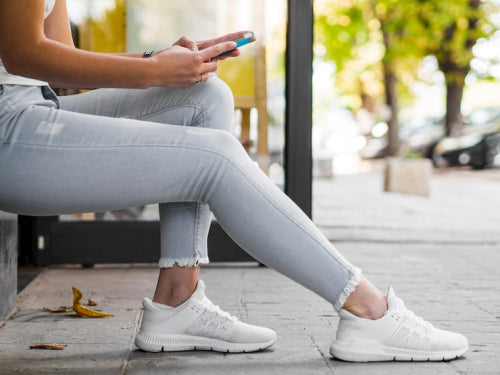

In the vibrant malls of Bengaluru's Indiranagar district or New Delhi's Select Citywalk, shoppers increasingly linger over sock displays that spotlight bold, eye-catching designs crafted from bamboo fibers and organic cotton. What was once a mundane necessity is now a deliberate choice reflecting deeper values. This evolution signals a profound shift in India's sock industry, where sustainability is no longer a niche concern but a driving force reshaping consumer habits and manufacturing priorities.
Tired of socks that fade fast, slip down, or feel rough after a few wears? It's frustrating when your everyday essentials can't keep up leaving you adjusting, sweating, or ditching them altogether. Soxytoes solves this with thoughtfully engineered socks made from premium yarns, seamless toes, arch support, and moisture-wicking comfort. From bamboo-soft basics to bold, pop-culture-inspired designs for men, women, and kids, every pair blends lasting quality with personality because your socks should feel as good as they look, all day long. Shop Now!
Sustainable Socks: The Growing Trend Shaping the Future of Fashion Footwear
Eco-conscious consumers are fueling demand for greener fashion options, prompting the sock sector to adopt innovative, environmentally responsible materials. In dynamic urban centers such as New Delhi, Mumbai, and Bengaluru, these sustainable choices are redefining footwear accessories.
Traditionally viewed as purely functional items hidden beneath shoes, socks have ascended to fashion prominence in contemporary India. Heightened awareness of the apparel industry's environmental impact from excessive water use to pollution has spurred metropolitan buyers to demand alternatives that align with planetary health. This sustainability imperative now permeates even the humblest wardrobe staples.
Younger demographics in cities like Mumbai and Gurugram are leading the charge, favoring brands that embody ethical production. This mirrors global and regional momentum: the sustainable fabrics market, currently valued at USD 37.26 billion in 2025, is projected to exceed USD 115.72 billion by 2035, advancing at a robust 12% CAGR from 2026 onward, propelled by consumer shifts toward responsible textiles.
Emerging Trends in Sustainable Sock Materials
The transition to eco-friendly fibers is gaining momentum, with organic cotton, bamboo, and recycled polyester at the vanguard. These materials deliver substantial environmental advantages while enhancing wearer experience.
Bamboo stands out for its minimal resource needs requiring far less water and no pesticides compared to conventional crops making it a highly sustainable option. It also boasts natural antibacterial properties and superior moisture-wicking capabilities, ideal for enduring Mumbai's sweltering humidity or Bengaluru's extended office hours.
Organic cotton drastically cuts water consumption, while recycled polyester repurposes post-consumer waste, slashing energy use in production. As highlighted in industry analyses, these alternatives are transforming sock manufacturing by prioritizing lower ecological footprints without compromising on performance metrics like breathability, durability, and support.
Design innovation flourishes alongside functionality. Premium socks now feature seamless construction, cushioned soles, and vibrant patterns, demonstrating that eco-responsibility can coexist with luxury and style.
Indian pioneers are driving this change. Noida-based Soxytoes exemplifies the trend, blending pop-culture-inspired prints with responsibly sourced yarns. Brands like Sock Republic employ combed organic cotton and bamboo rayon for exceptional softness, while Heelium leverages bamboo's odor-controlling qualities to suit active routines in Hyderabad and Pune.
Real-World Examples and Applications
Domestic brands are pioneering practical sustainability. Soxytoes, operating from Noida and serving Delhi-NCR, Mumbai, and Bengaluru, distinguishes itself through vivid, conversation-starting designs from quirky food motifs to meme references paired with ethical sourcing and biodegradable packaging. Their bamboo-organic blends appeal strongly to discerning buyers seeking personality in everyday wear.
Sock Republic offers high-resolution printed options from eco-fabrics, distributing nationwide to areas including Pune and Chennai. Knit Knots prioritizes hypoallergenic and anti-odor features tailored for urban commutes. These companies address rising preferences in city hubs, where moisture management and longevity are prized amid fitness booms and hybrid work lifestyles.
Performance integrations elevate the category: compression variants for prolonged standing, grippy soles for Bengaluru yoga sessions, or seamless fits for Gurugram professional attire. Sustainable socks thus transcend utility, becoming versatile accessories that complement sneakers, loafers, or traditional outfits.
The broader sector benefits from this innovation wave. As detailed in specialized industry insights, the surge in materials like bamboo, organic cotton, and recycled polyester stems from heightened environmental consciousness and demand for ethical products, markedly reducing resource depletion and waste.
Key Challenges, Limitations, and Risks
Despite promising traction, obstacles persist. Premium sustainable materials entail higher sourcing and processing costs, challenging price competitiveness in India's value-driven market.
Securing reliable local supplies of organic cotton or bamboo proves intricate, with supply chains susceptible to fluctuations in agriculture and global trade. Disruptions can impede consistent production scales.
Consumer education lags in many segments; even in progressive metros like New Delhi and Mumbai, affordability often trumps eco-benefits. Many remain unaware of quantifiable gains, such as bamboo's low-water footprint or recycled polyester's energy savings, complicating marketing efforts.
Intensifying competition from inexpensive fast-fashion imports further strains domestic players committed to ethical standards, risking margin erosion if scaling falters.
Opportunities, Efficiencies, and Business Impacts
The rewards, however, are substantial. Brands committing to sustainability cultivate deep loyalty among environmentally attuned consumers, especially in Bengaluru and Delhi-NCR cohorts.
India's socks market, valued at approximately INR 53.58 billion in recent assessments, is set for vigorous expansion, with premium and eco-oriented segments capturing increasing share amid rising disposable incomes and urbanization.
Circular economy models present untapped potential: take-back schemes for recycling worn pairs could establish closed-loop systems, minimizing waste. Technological integrations blockchain for supply transparency or AI-driven optimization to curb excess production promise efficiency gains and stronger credibility.
Retailers in Hyderabad, Pune, and Mumbai stand to benefit by curating sustainable inventories, appealing to demographics prepared to invest in quality aligned with conscience. This strategy not only elevates profitability but fortifies market positioning in an evolving landscape.
Millennials and Generation Z, in particular, gravitate toward brands embodying sustainability, as evidenced by broader textile trends favoring innovative, low-impact fabrics with advanced properties like antibacterial and highly absorbent qualities.
The Future Outlook for Sustainable Socks
Sustainable socks represent far more than a passing phase; they embody a fundamental reorientation in India's fashion ethos. From Mumbai's bustling streets to Bengaluru's innovation hubs, purchasers are actively supporting lighter-impact materials through daily decisions.
With technological advancements and spreading awareness accelerating adoption, anticipate widespread emulation, fusing traditional Indian craftsmanship with cutting-edge eco-innovations.
Early adopters among retailers and manufacturers will secure enduring advantages, resonating authentically with values increasingly central to consumer identity.
Ultimately, choosing a pair woven from organic cotton or bamboo constitutes a modest yet meaningful act one that collectively propels a more sustainable tomorrow, step by deliberate step.
Frequently Asked Questions
What are the most sustainable materials used in eco-friendly socks?
The three primary sustainable materials revolutionizing sock manufacturing are bamboo, organic cotton, and recycled polyester. Bamboo requires minimal water and no pesticides while offering natural antibacterial and moisture-wicking properties. Organic cotton drastically reduces water consumption compared to conventional cotton, and recycled polyester repurposes post-consumer waste, significantly cutting energy use in production. These materials deliver environmental benefits without compromising on comfort, durability, or performance.
Are sustainable socks more expensive than regular socks?
Yes, sustainable socks typically cost more due to higher sourcing and processing expenses for premium eco-friendly materials like organic cotton and bamboo. However, the investment pays off through superior durability, enhanced comfort features, and alignment with ethical production values. Brands committed to sustainability are also cultivating deep customer loyalty, particularly among millennials and Gen Z consumers who prioritize environmental responsibility. As the market expands and production scales up, prices are expected to become more competitive.
How do bamboo socks compare to cotton socks in terms of comfort and sustainability?
Bamboo socks outperform traditional cotton in several key areas, offering superior moisture-wicking capabilities, natural antibacterial properties, and exceptional breathability making them ideal for humid climates and active lifestyles. From a sustainability perspective, bamboo requires far less water than conventional cotton and grows without pesticides, resulting in a significantly lower ecological footprint. Bamboo also naturally controls odor and provides a softer feel against the skin, making it an increasingly popular choice for eco-conscious consumers seeking both comfort and environmental benefits.
Disclaimer: The above helpful resources content contains personal opinions and experiences. The information provided is for general knowledge and does not constitute professional advice.
You may also be interested in: Pop Culture Fashion Trends Shaping Sock Design in 2025
Tired of socks that fade fast, slip down, or feel rough after a few wears? It's frustrating when your everyday essentials can't keep up leaving you adjusting, sweating, or ditching them altogether. Soxytoes solves this with thoughtfully engineered socks made from premium yarns, seamless toes, arch support, and moisture-wicking comfort. From bamboo-soft basics to bold, pop-culture-inspired designs for men, women, and kids, every pair blends lasting quality with personality because your socks should feel as good as they look, all day long. Shop Now!
Powered by flareAI.co