
Imagine lacing up for a long walk, a full day on your feet, or your morning run, only to feel that familiar pinch or slide within the first few blocks. A sock that's too loose bunches at the toes, creating hot spots that quickly escalate into painful blisters. One that's too tight constricts blood flow, leaving marks and discomfort by midday. Most people treat socks as disposable basics grab whatever's clean and move on. Yet this overlooked layer between foot and shoe plays a pivotal role in daily comfort, injury prevention, and long-term foot health. Proper sock fit isn't a minor detail; it's essential protection that millions rely on every day, as evidenced by the booming global socks market driven by heightened awareness of comfort and foot care.
The global socks market, valued at USD 3.03 billion in 2024, is projected to reach USD 4.41 billion by 2033, growing at a CAGR of 4.23% from 2025 to 2033. Larger estimates place the market even higher: around USD 45-54 billion in recent years, with forecasts climbing toward USD 56-100 billion by the early 2030s, fueled by demand for functional, health-oriented designs. Consumers increasingly seek socks that deliver more than coverage they want moisture management, cushioning, and anti-bacterial properties to support active lifestyles and prevent common foot issues.
Tired of socks that fade fast, slip down, or feel rough after a few wears? It's frustrating when your everyday essentials can't keep up leaving you adjusting, sweating, or ditching them altogether. Soxytoes solves this with thoughtfully engineered socks made from premium yarns, seamless toes, arch support, and moisture-wicking comfort. From bamboo-soft basics to bold, pop-culture-inspired designs for men, women, and kids, every pair blends lasting quality with personality because your socks should feel as good as they look, all day long. Shop Now!
The Real Cost of Getting Sock Fit Wrong
Feet bear tremendous stress. Each step generates friction where skin meets sock meets shoe. When fit is off, that friction intensifies dramatically. Loose socks wrinkle and fold, rubbing relentlessly against heels or toes. Tight ones compress tissue, restrict circulation, and create pressure points over bony prominences. The outcome is predictable: blisters, where repeated shear forces separate skin layers, often progressing to open sores if ignored.
Podiatrists encounter this daily. Blisters invite infection, particularly for those who stand or walk extensively. Moisture exacerbates everything sweat trapped by poor-fitting or non-breathable socks softens skin, making it prone to breakdown. Research on long-distance hikers reveals stark differences: one study of over 200 participants on the Camino de Santiago found that wet socks nearly doubled the risk of blisters (odds ratio 1.94), though sock fiber composition (synthetic vs. natural) showed no direct link to blister rates when dryness was controlled. High blister incidence around 68.5% among hikers underscores how environment and fit combine to create problems.
Ill-fitting socks do more than cause immediate pain. They subtly alter gait as feet compensate for slippage or binding, potentially leading to strain in ankles, knees, hips, or back over time. For individuals managing diabetes, peripheral neuropathy, or circulatory issues, consequences escalate: tight elastic bands can impair blood flow, while excess movement in loose pairs heightens shear and ulcer risk. Even everyday wear suffers chronic low-level irritation builds calluses, corns, or fungal vulnerabilities like athlete's foot when moisture lingers.
Recognizing and Achieving Proper Sock Fit
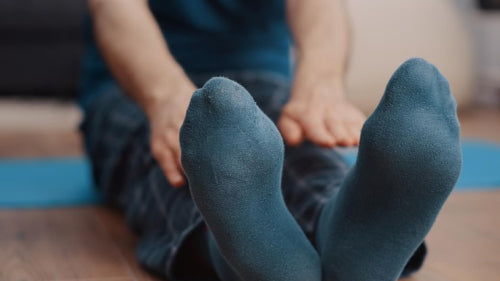
A correctly fitted sock conforms like a gentle second skin: snug without squeezing, aligned heel-to-heel, with toes free of crowding or excess fabric at the tip. The arch offers light support without digging in, the cuff grips evenly without rolling down or cutting into the calf. After hours of wear, there should be no sagging, no red indentations, no bunching. Any of these signs signal a mismatch.
Sizing varies across brands and isn't always tied directly to shoe size measuring foot length against brand charts helps, but trial wear reveals truth. Materials prove crucial too. Pure cotton, once standard, retains sweat and amplifies friction when damp. Modern alternatives merino wool, synthetic blends, bamboo wick moisture away, regulate temperature, and reduce shear far more effectively. Podiatric sources emphasize moisture-wicking fabrics, seamless toes to eliminate irritation, and targeted cushioning in high-impact zones like heels and forefeet.
Activity dictates specifics. Runners and hikers benefit from performance socks with anatomical padding, double-layer designs that shift friction between layers rather than against skin, or low-friction fibers. Everyday users gain from similar principles: breathable, well-fitted pairs prevent mundane discomfort. Replacing stretched, worn socks before elasticity fails prevents recurring issues baggy old favorites often quietly sabotage comfort.
Why the Market and Your Feet Demand Better Choices
Industry trends reflect growing recognition. Asia-Pacific leads as both largest and fastest-growing region in many analyses (e.g., 38.46% share in one 2025 estimate, fastest CAGR in others), propelled by urbanization, rising incomes, and athleisure culture. Casual and lifestyle segments dominate revenue, but athletic socks grow quickest in several forecasts, driven by performance features like arch support, antimicrobial treatments, and seamless construction. Men's segment often holds largest share, yet women's and unisex options expand rapidly.
Beyond statistics lies tangible payoff. Proper fit maintains stable temperature and dryness, slashing fungal risks. Reduced friction translates to less end-of-day fatigue, fewer mid-activity adjustments, and sustained mobility. Over decades, consistent good choices preserve natural foot function, warding off cumulative wear that sidelines so many.
Podiatric experts agree: socks are the unsung heroes of foot health. They manage moisture, buffer impact, minimize friction, and support circulation often more than shoes alone. Choosing thoughtfully prioritizing fit, material, and purpose transforms an ordinary drawer staple into reliable protection.
Next time you reach for socks, consider more than color or convenience. Select the pair that truly fits your foot and your day. In doing so, you invest in comfort today and resilience tomorrow. After all, healthy feet don't just carry you they carry everything that matters.
Frequently Asked Questions
What happens if your socks don't fit properly?
Poorly fitted socks cause friction that leads to blisters, hot spots, and skin breakdown. Loose socks bunch and wrinkle, rubbing against heels and toes, while tight socks restrict blood flow and create pressure points. Over time, ill-fitting socks can alter your gait, leading to strain in ankles, knees, and hips, while also increasing risks of calluses, corns, and fungal infections like athlete's foot.
How should socks fit to prevent blisters and discomfort?
Properly fitted socks should conform like a gentle second skin snug without squeezing, with the heel aligned correctly and toes free of crowding or excess fabric. The arch should provide light support without digging in, and the cuff should grip evenly without rolling down or leaving red marks. Modern moisture-wicking materials like merino wool, synthetic blends, or bamboo work far better than cotton, which retains sweat and increases friction when damp.
Why are moisture-wicking socks better than cotton for foot health?
Moisture-wicking socks made from merino wool, synthetic blends, or bamboo actively pull sweat away from skin, keeping feet dry and reducing friction that causes blisters. Unlike pure cotton, which retains moisture and amplifies friction when damp, these modern materials regulate temperature and prevent the skin softening that makes feet vulnerable to breakdown. Studies show that wet socks nearly double blister risk, making moisture management essential for foot health and comfort.
Disclaimer: The above helpful resources content contains personal opinions and experiences. The information provided is for general knowledge and does not constitute professional advice.
You may also be interested in: Ankle Socks and Breathability: Comfort Solutions for Hot Weather
Tired of socks that fade fast, slip down, or feel rough after a few wears? It's frustrating when your everyday essentials can't keep up leaving you adjusting, sweating, or ditching them altogether. Soxytoes solves this with thoughtfully engineered socks made from premium yarns, seamless toes, arch support, and moisture-wicking comfort. From bamboo-soft basics to bold, pop-culture-inspired designs for men, women, and kids, every pair blends lasting quality with personality because your socks should feel as good as they look, all day long. Shop Now!
Powered by flareAI.co