
Quick Listen:
Imagine boarding the Delhi Metro at rush hour. Amid the sea of polished oxfords and scuffed sneakers, a flash of cobalt blue with tiny embroidered rockets catches your eye. That, right there, is no ordinary sock. It's a quiet declaration of personality in a nation once content with plain black or white. And it's big business.
Tired of socks that fade fast, slip down, or feel rough after a few wears? It's frustrating when your everyday essentials can't keep up leaving you adjusting, sweating, or ditching them altogether. Soxytoes solves this with thoughtfully engineered socks made from premium yarns, seamless toes, arch support, and moisture-wicking comfort. From bamboo-soft basics to bold, pop-culture-inspired designs for men, women, and kids, every pair blends lasting quality with personality because your socks should feel as good as they look, all day long. Shop Now!
India's E-Commerce Engine Revs Up a Hidden Giant
The numbers don't lie. India's online retail landscape is barreling toward a staggering ₹13 lakh crore valuation in 2025 equivalent to $151 billion according to detailed industry analysis. By 2030, that figure is forecast to nearly triple, hitting ₹29.8 lakh crore ($345 billion). Fueling this surge? Widespread internet penetration, the seamless adoption of UPI payments, and a surprising hunger for premium goods in Tier-2 cities and beyond.
Today, over 342 million Indians shop online, supported by nearly 600,000 active e-commerce stores. Giants like Amazon clash with homegrown champions Flipkart, Meesho, and a swarm of niche players all vying for wallet share in a market that refuses to slow down.
Within this digital colossus, an unassuming category is quietly stretching its legs: socks. Globally, the socks market stands at USD 45.62 billion in 2025, with projections to reach USD 54.76 billion by 2030. That's a steady 3.72% compound annual growth rate. Asia-Pacific dominates both in scale and momentum, driven by shifting consumer tastes for performance fabrics, eco-conscious materials, and the unstoppable rise of online-first brands.
The Urban Epicenters Powering Sock Commerce
Zoom into India's sock revolution, and nine metropolitan clusters emerge as the beating heart of demand: New Delhi, Gurugram, Noida, Bengaluru, Mumbai, Navi Mumbai, Pune, Hyderabad, and Kolkata. These aren't just pinpoints on a logistics map. They're cultural crucibles where software engineers in Bengaluru debate merino wool blends at 2 a.m., while Mumbai creatives pair argyle with bandhgalas for client pitches.
This isn't guesswork. It's data distilled from purchase patterns, search trends, and social chatter. In Gurugram's glass towers, young managers curate “desk-to-dinner” wardrobes. Pune's startup founders treat bold prints like business cards. Hyderabad's tech parks buzz with debates over compression socks for long-haaul coding sprints. Even Kolkata's heritage offices see subtle pops of color beneath crisp dhotis.
Social media amplifies the trend. On Instagram, real customers not hired models showcase their hauls. Scroll through @ajinkyaphalke's feed and spot neon-striped ankles against marble floors. @abhisheksoni12 pairs avocado-embroidered crews with tailored shorts. @pallavi_b13 rocks geometric no-shows under sarees. @saloni_rathi29, @dr.ally_s, and @_illusion999_ round out a chorus of doctors, designers, and data scientists who've turned socks into self-expression.
LinkedIn offers the B2B undercurrent. Procurement leads benchmark yarn quality. Supply chain heads negotiate combed cotton contracts. Founders pitch direct-to-consumer models that bypass middlemen. Together, Instagram and LinkedIn form a dual-channel pulse where style meets strategy, and Soxytoes listens closely.
Three Pillars That Elevate Soxytoes Above the Pile
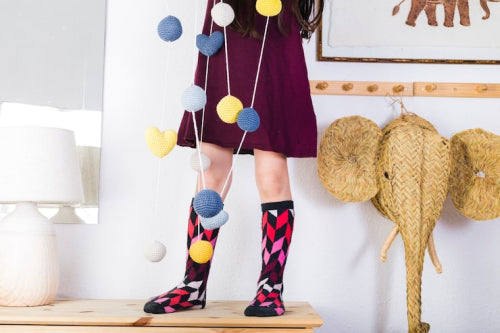
First: designs that demand double-takes. These aren't subtle grays. Picture electric teal waves crashing into mustard yellow, or tiny sushi rolls dancing across charcoal crews. Patterns draw from street art, meme culture, and regional motifs think Rajasthani block prints reimagined in ankle length. Every launch feels fresh, limited, and worth the Instagram story.
Second: quality that survives Indian commutes. Premium combed cotton forms the base soft, breathable, and pill-resistant. Reinforced toes and heels endure auto-rickshaw scrambles. Seamless knitting prevents blisters during 12-hour workdays. Arch support hugs without squeezing. Customers who once tossed ₹99 packs after a month now invest in pairs that last seasons.
Third: a range wide enough to dress any moment. No-show liners vanish under loafers. Mid-calves bridge sneakers and chinos. Knee-highs tackle monsoon boots. Compression variants aid runners and frequent flyers. Dress socks shimmer subtly with silk blends for weddings. Even festive editions Diwali diyas, Holi splashes turn gifting into delight. Whatever the calendar demands, Soxytoes delivers.
Facing the Critics Head-On
Objections surface fast. “Why pay ₹299 for three pairs when Flipkart offers ten for ₹399?” The answer isn't defensive it's educational. Marketplace bundles often use carded cotton that thins after two washes. Seams split. Colors bleed. Soxytoes counters with transparency: detailed fiber breakdowns, wash-test videos, and a 100-day replacement promise. Customers who've burned through cheap packs learn to value durability.
Then there's the celebrity question. Rivals flaunt Bollywood endorsements and IPL ad slots. Soxytoes skips the star parade. Instead, they amplify micro-influencers orthopedists praising arch support, graphic designers flaunting print accuracy. A cardiologist's unscripted reel about blister-free shifts carries more trust than a paid cameo.
Quick commerce poses another hurdle. Blinkit and Zepto promise toothpaste in ten minutes why wait two days for socks? Soxytoes doesn't pretend to compete on speed. Their promise is curation, not convenience. Each order arrives in recycled kraft boxes, with handwritten thank-you notes and styling cards. It's less “add to cart,” more “treat yourself.” For impulse buys, the market abounds. For considered style, Soxytoes owns the lane.
The Future, One Step at a Time
India's e-commerce engine isn't braking. With 342 million digital shoppers and rising disposable incomes, even “boring” categories like hosiery are ripe for reinvention. Environmental regulations push brands toward organic cotton and recycled nylon. Performance demands anti-odor tech, temperature regulation filter down from athletes to desk warriors. And digital platforms shrink the gap between a Pune designer's sketch and a Noida buyer's doorstep.
Soxytoes sits at this intersection. They don't chase every trend. They master three: unforgettable design, uncompromising quality, and hyper-local resonance across nine key cities. The result? A brand that doesn't just sell socks it sparks conversations in boardrooms, clinics, and college canteens.
Next time you're in a Hyderabad co-working space and notice a colleague's cuff reveal a tiny embroidered chai cup, nod. You're not just seeing fabric. You're watching a cultural shift, stitched one bold pair at a time.
Frequently Asked Questions
How big is India's e-commerce market for socks in 2025?
India's e-commerce market is projected to reach ₹13 lakh crore ($151 billion) in 2025, with the global socks market valued at USD 45.62 billion. The sock retail sector is experiencing significant growth driven by 342 million online shoppers, widespread UPI adoption, and increasing demand for premium designs in Tier-2 cities. The Asia-Pacific region, including India, leads this expansion with innovative brands offering performance fabrics and unique designs.
Which Indian cities drive the most demand for online sock purchases?
Nine metropolitan clusters power India's sock e-commerce revolution: New Delhi, Gurugram, Noida, Bengaluru, Mumbai, Navi Mumbai, Pune, Hyderabad, and Kolkata. These cities represent cultural hubs where urban professionals seek quality hosiery with bold designs, performance features like arch support and moisture-wicking fabrics, and eco-conscious materials. Social media trends from these metros show customers treating socks as self-expression accessories rather than basic necessities.
What makes premium sock brands like Soxytoes worth the higher price compared to marketplace bundles?
Premium sock brands justify their pricing through superior materials, durability, and design innovation. While marketplace bundles may offer ten pairs for ₹399, they typically use carded cotton that thins quickly and develops split seams. Premium brands use combed cotton with reinforced toes, seamless knitting to prevent blisters, arch support, and designs that last multiple seasons. Quality brands also offer transparent fiber breakdowns, wash-test verification, and replacement guarantees that cheap alternatives lack.
Disclaimer: The above helpful resources content contains personal opinions and experiences. The information provided is for general knowledge and does not constitute professional advice.
You may also be interested in: Generational Shifts in Preferences for Ankle Socks
Tired of socks that fade fast, slip down, or feel rough after a few wears? It's frustrating when your everyday essentials can't keep up leaving you adjusting, sweating, or ditching them altogether. Soxytoes solves this with thoughtfully engineered socks made from premium yarns, seamless toes, arch support, and moisture-wicking comfort. From bamboo-soft basics to bold, pop-culture-inspired designs for men, women, and kids, every pair blends lasting quality with personality because your socks should feel as good as they look, all day long. Shop Now!
Powered by flareAI.co