
Walk into most sock factories and you will hear the same thing before you see anything at all - the steady clatter of knitting machines running through their loops, hour after hour, without a break. This particular factory has been running that same rhythm since 1996. Long before "sustainable fashion" became a marketing line and long before anyone thought socks needed a rebrand, this place was already spinning yarn into something people would wear every single day without a second thought.
That is the strange thing about socks. Nobody remembers buying them, but everybody notices when a pair goes bad - the heel thins out, the elastic gives up, the toe seam starts digging in. A factory that has survived almost three decades in this business has had to solve exactly that problem, over and over, for every new fabric, every new trend, and every new customer expectation.

Why 1996 Still Matters
Three decades is a long stretch in manufacturing. Machines get replaced, fabrics change, buyers get pickier. But what carries over from 1996 is not the equipment, it is the habit of doing things properly even when nobody is watching. The people who started this factory were not chasing a viral product. They were learning how yarn behaves under tension, how a knitting machine reacts to humidity, how a badly wound bobbin can ruin an entire batch before anyone notices.
That kind of experience does not show up on a product page, but it shows up on your feet. It is the difference between a sock that holds its shape after twenty washes and one that turns into a limp rag after five. It’s the technology to create socks that don’t sag, that keep your feet cool and dry, that stay fresh and don’t smell, that help avoid tired aching legs even at the end of a long day, that offer relief from foot and leg pain, that are especially made for diabetics. They call them Socks 2.0 - Elevated, Engineered, Essential.
Where It Actually Begins: The Yarn
Most people assume a sock starts with a machine. It does not. It starts with yarn selection, and this step decides almost everything that follows.
Depending on the sock being made, the factory works with a mix of raw materials - cotton, bamboo, thermal blends, moisture-wicking blends, polyamide, elastane and sometimes even yarns treated for antibacterial properties or infused with aloe vera for softer wear. Every batch of yarn is checked for consistency before it goes anywhere near a machine. Yarn defect is one of the most common reasons a sock ends up in the discard pile after just a few washes, so this stage gets more attention than most customers would ever expect.
Cotton is picked for everyday comfort and breathability. Bamboo goes into premium socks meant for people who want something that’s naturally soft, moisture wicking and odour-resistant. Compression yarns are knitted for their enhanced foot health properties, like the pairs in the compression therapy collection. None of this is random. Each yarn type is matched to a purpose before a single stitch is knitted.

The Knitting Floor
This is where the factory earns its keep. Rows of circular knitting machines run continuously, each one programmed for a specific pattern, thickness, and size range. A single machine can produce a plain crew sock in one run and switch to a patterned ankle sock in the next, depending on what the day's order sheet calls for.
Watching this floor in motion tells you a lot about how socks manufacturers in India have modernised over the years. What used to be a slower, more manual process is now handled by machines that adjust tension automatically and flag inconsistencies before they turn into defects. That said, machines only do half the job. Someone still has to design the product, check the output, feel the fabric, and catch the flaws a sensor might miss - a slightly uneven cuff, a seam that sits wrong, a colour that does not quite match the sample.
Quality Checks That Actually Slow Things Down
Every sock passes through more than one set of hands before it is approved. Seams are checked for smoothness, since a rough toe seam is the single biggest complaint in this industry. Elastic bands are stretch-tested to make sure they will not sag after a few washes. Colours are compared against approved samples under proper lighting, because factory lighting can make shades look different than they will in a store or on a screen.
This is also where a brief goes from paper to product. If the brief is inaccurate, sizing wrong, or the yarn ratio off, the whole batch can turn out unusable, so this stage is treated as non-negotiable rather than a formality. It slows production down, but it is the only way to keep every pair consistent with the one before it.

Packing and the Final Mile
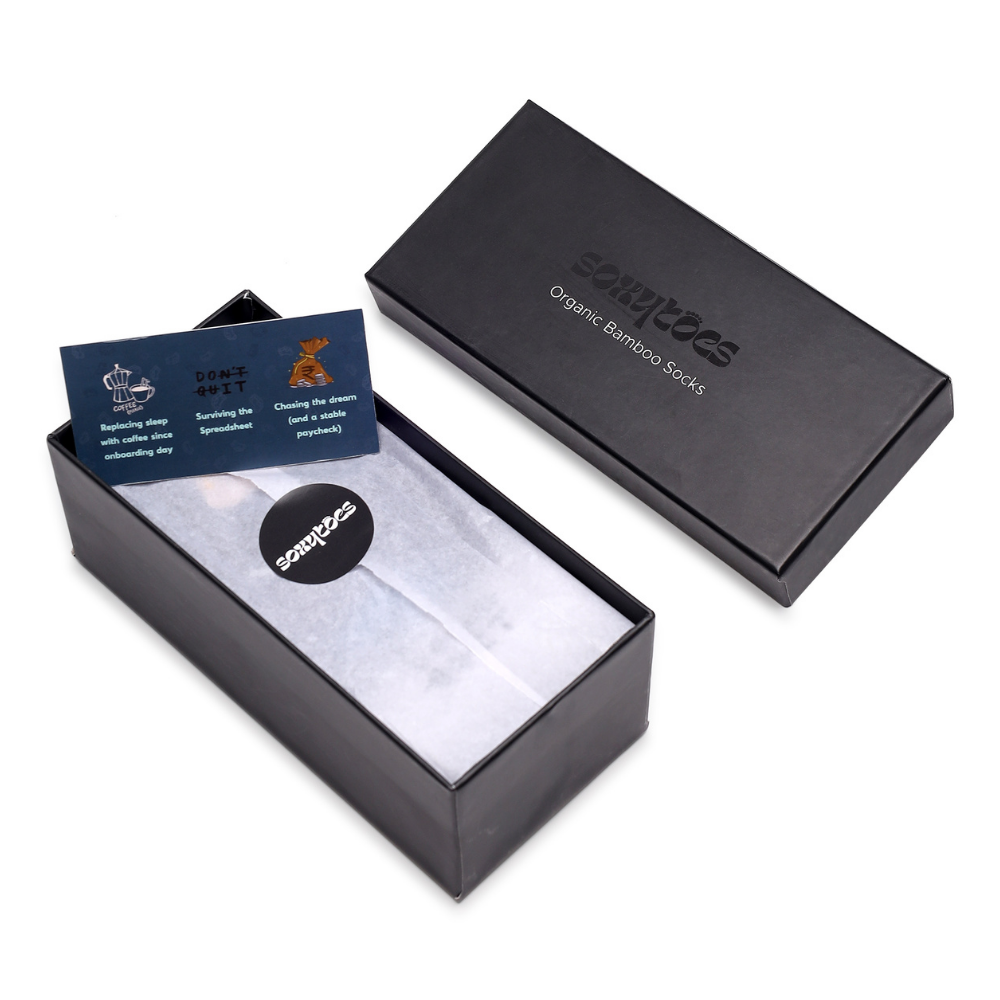
Once socks clear quality checks, they get paired, folded, tagged, and packed for dispatch. It sounds like the least interesting part of the process, but it is where a lot of factories cut corners - mismatched pairs, missing tags, sizes mixed up in bulk cartons. A factory that has been doing this since 1996 has systems in place specifically to avoid these basic mistakes, because a customer opening a box to find two different sizes does not care how good the knitting floor was.
What This Says About Sock Manufacturing in India
India's sock manufacturing industry has grown well beyond plain white cotton socks sold by the dozen. Factories today produce everything from diabetic-friendly socks to compression wear, gripper socks, and fully customised designs for corporate gifting and private labels. Buyers now come from across India as well as international markets, drawn by a mix of skilled labour, competitive costs, and factories that have had decades to refine their processes.
A factory rooted in 1996 sits in an interesting spot within this shift. It has watched trends come and go, from purely functional socks to fashion-forward designs people now buy for how they look as much as how they feel. What has not changed is the basic discipline behind making a sock that actually lasts - thoughtful product design, decent yarn, careful knitting, honest quality checks, and packaging that does not undo all that work at the last step, no matter how often the new arrivals shelf gets refreshed.

The Bigger Picture
It is easy to think of a sock as a small, forgettable thing. But behind every pair sitting in a drawer is a yarn choice, a knitting setting, a person checking a seam by hand, and a factory floor that has been refining this exact process for almost thirty years. That is the story behind Soxytoes, and it is also the story of what it actually takes to make something as ordinary as a sock properly, batch after batch, year after year.
FAQs
1. What makes a sock factory that started in 1996 different from newer ones?
Decades of running the same process means fewer surprises. A factory with that kind of history has already worked through most of the yarn, machine, and quality issues that newer setups are still figuring out.
2. What raw materials are used in the process of knitting socks?
Mostly cotton, bamboo, polyamide and elastane for stretch. The type of material depends on if the sock is intended for casual, formal or sports use, or for health and orthopaedic reasons like compression, diabetic or foot alignment socks.
3. Why does the process of checking socks slow the production of each piece down?
In order to ensure there is a high-quality batch of socks, most of them require manual checking and testing. The elastic, seams, and the colours are usually checked both manually and machine-read. If this step is skipped, factories will have low-quality batches which can dissatisfy customers.
4. How has India developed its sock manufacturing industry over time?
From being more focused on utilitarian plain socks to creating fashion-oriented, health-care oriented, and custom private-label products. The development was aided by newer yarns, upgraded knitting machinery and higher quality control.
5. Why is the packing stage essential to the sock manufacturing process?
A good-quality pair of socks can still turn out to have the wrong size or be mismatched if the packing is not done right. It is the final stage of production, and therefore if something goes wrong, all the previous steps have been spoiled.